How can we resist a release called "Bird Food"? This may also be the #MirloMondays pick with the earliest recording date...1968! Not only that, but the project uses our fundraiser functionality (which we'd love to see more of)! 


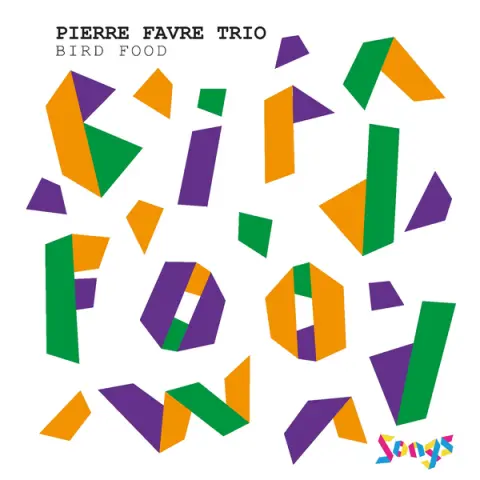
Bird Food
Bird FoodAn album by Pierre Favre Released 2026-06-19 Pierre Favre has issued albums in seven different decades. But until now, there has been only one Pierre Favre Trio album, Santana, which the Swiss drummer recorded in October 1968 with pianist Irène Schweizer, also from Switzerland, and German bassist Peter Kowald. That record not only introduced Favre as a bandleader; it is the first documentation of his profoundly attuned and rewardingly lengthy partnership with Schweizer. And now, over half a century later, along comes Bird Food to push back the timelines and complicate the discographies. Recorded at Radio Studio Zurich on February 19, 1968, it precedes the making of Santana by nearly seven months. Where has the tape been for all of this time? In Favre’s own trove of forgotten recordings, where it sat until he and trombonist Samuel Blaser recently found it while sorting through the archive. In 1968 a different musician occupied the bass chair: Jiří Mráz, who would subsequently move to the USA, anglicize his Czech given name to George, and become a first-call sideman for in-the-tradition jazz royalty including Dizzy Gillespie, Oscar Peterson, Stan Getz, and Tommy Flanagan. How did Mraz end up in one of Switzerland’s first free jazz bands? Recalls Favre, “I was always playing through Europe and I met him first time in Czechoslovakia. First time, we just jammed, but later on, when I played with Irene, I asked him to join the trio. And then he came to Switzerland or Germany, wherever we played. But after a while he couldn't get a work permit to stay in Switzerland and he got a chance to play some gig in the States, so he went to the States.” Favre and Schweizer had already established their musical partnership before they recorded Bird Food. It began when he worked for the cymbal manufacturer Paiste and she took a job as his secretary; they played together on breaks. “In the bar, we had a piano and drums and everything, and we played that. It was fantastic! We worked at the Paiste factory, and then at the same time, we were touring through Europe. We played everywhere, sometimes in the storm, in the snow, in Scandinavia, many, many adventures. But we were crazy about the music, and we would just play, you know. Everything was improvised. We would just improvise and it was a discovering of freedom.” That improvisational practice, however, did not preclude playing someone else’s tune. Six days before this recording was made, the trio had played a well-received set at the Kreuzstube in Willisau. Their rapport is evident from the crash of the first seconds, as Mraz’s arco playing slaloms through Favre’s surging barrage and Schweizer drops teasing chords that lay the foundation for a sprightly statement of the theme from Ornette Coleman’s “Bird Food.” Within two minutes, Favre redirects the music through a radiant hall-of-mirrors cymbal interlude, and then Mraz takes a turn that starts out as light and precise as a soft shoe shuffle executed on a high wire and finishes sufficiently swinging to restart a stopped heart. “He did the right notes,” Favre recalls. “Fantastic music.” Favre is similarly appreciative of Schweizer’s playing. “I think Irene played her best on this album. What I like is that she listened, and I could hear what she played, and we could choose things to do. React, but in a way, you don't react.” That parallel spontaneity is evident near the end of “Bird Food,” as the pianist disassembles a bluesy phrase while the drums launch one bristling wave after another while the bass finds a center and quietly holds it. Throughout the session, Mraz is an agent of engagement and coherence. He is quietly assertive, complementing Schweizer’s pensive explorations of her instrument’s interior on “Sounds II.” On “Hinden,” his sprinting line locks right into the Favre’s sizzling attack and the pianist enacts a thrilling dialogue between strategically broken left hand punctuation and dizzying right hand lines. And his bowing contributes to the whirlwind drama of “The Attack.” This recording affirms that even in the early days of free jazz, there was room for freedom to includes input that was cohesive and elegant. Bill Meyer, Berwyn IL, December 2025.