This article will instead use forecasts from the Cook Political Report.
Here are the forecasts for US House races from the Cook Political Report, as of March 12, 2026.
https://www.cookpolitical.com/ratings/house-race-ratings
14/x
The results of the 2025 elections and the results of recent special elections indicate Democrats are positioned to perform well in the 2026 midterms.
Now, let’s explore just how well Democrats could do in 2026 in the US House, by examining several scenarios, in ascending levels of optimism for Democrats.
16/x
This ongoing thread can be read as an article on my blog, Meticulous Musings.
https://jasonbeets.blogspot.com/2026/03/midterm-math-house-edition.html
17/x
jasonbeets.blogspot.com
Midterm Math: House EditionBetween Trump’s War on Iran , Trump’s tariffs , and the murder of American citizens by agents of the federal government, things are not go...
But given the current political climate, fueled by a narcissistic, idiotic, tyrannical buffoon of a president, Democrats will likely do much better than that.
https://www.cnn.com/2025/11/05/politics/fact-check-trump-groceries-identification
21/x

CNN
Fact check: Trump revives his false claim that Americans have to show ID to buy groceriesPresident Donald Trump has revived one of the most bizarre false claims from his first presidency and his 2024 campaign: an assertion that Americans are required to show identification to buy groceries.
The Cook Political Report considers 212 House seats to be Solid Democratic, Likely Democratic, or Lean Democratic.
Cook considers 206 House seats to be Solid Republican, Likely Republican, or Lean Republican.
23/x
Cook classifies 17 House seats as tossups.
If we divide these tossup races evenly, Democrats and Republicans would each receive 8.5 additional seats.
This analysis is for Cook’s median prediction, which produces a fractional result.
In practice, a seat would not be split by partisan affiliation, as the following analysis might suggest.
24/x
If you enjoy my political analysis, consider supporting my work on Patreon.
https://www.patreon.com/cw/MeticulousMusings
28/x
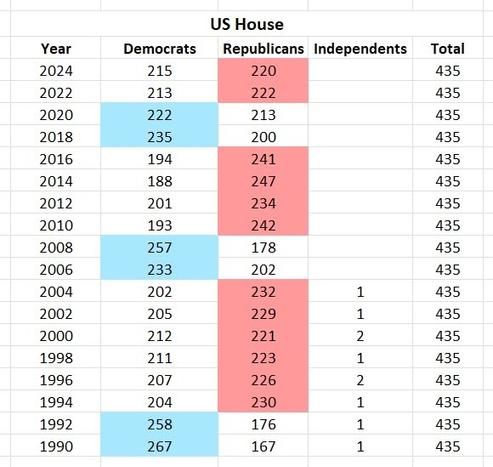
In 2020, Joe Biden was elected president, following Trump’s catastrophic mismanagement of the COVID pandemic.
https://jasonbeets.blogspot.com/2021/01/biden-to-improve-us-pandemic-response.html
30/x

jasonbeets.blogspot.com
Biden to improve US pandemic responseSoon after taking office on Jan. 20, President-Elect Joe Biden plans to enact executive actions that will significantly change US policy i...
That was the most recent election where Democrats won control of the US House.
In 2020, Democrats won 222 House seats, and Republicans won 213.
Coincidentally, those numbers exactly flipped in 2022, when Republicans won 222 seats and Democrats won 213.
31/x
Democrats performed particularly well in the US House in 2018, during Trump’s first midterm.
In 2018, Democrats won 235 seats in the US House.
Democrats would need to flip 20 seats in 2026 to perform as well as they did in 2018.
I find this outcome to be the most likely of the historical comparisons we will discuss today.
34/x
I created the graphs in this article using Flourish, a website that allows users to create compelling visual aids.
https://flourish.studio/features/
35/x
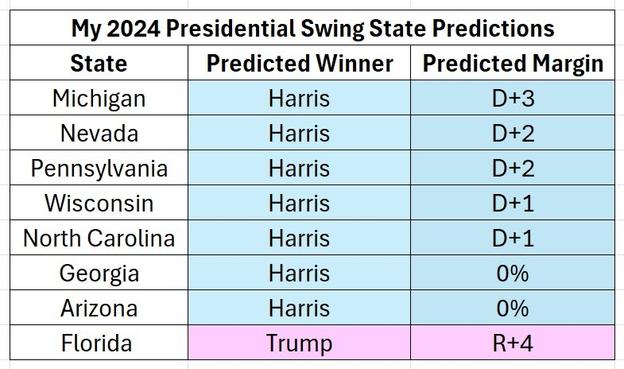
But that being said, I have consistently been optimistic about Democrats’ political chances, even in elections where Democrats didn’t end up doing particularly well.
https://jasonbeets.blogspot.com/2024/10/my-2024-presidential-predictions.html
38/x
jasonbeets.blogspot.com
My 2024 Presidential PredictionsPredictions are a fool’s game, but let’s play anyway. In this article, I predict how the swing states will vote in the 2024 US Preside...
This ongoing thread can be read as an article on my blog, Meticulous Musings.
https://jasonbeets.blogspot.com/2026/03/midterm-math-house-edition.html
44/x
jasonbeets.blogspot.com
Midterm Math: House EditionBetween Trump’s War on Iran , Trump’s tariffs , and the murder of American citizens by agents of the federal government, things are not go...
@jasonbeets@newsie.social
This line graph shows the numbers of seats won by Democrats and Republicans in the US House from 1990 to 2024.
54/x
#Congress #House #Democrats #Republicans #Graph #Politics #Elections